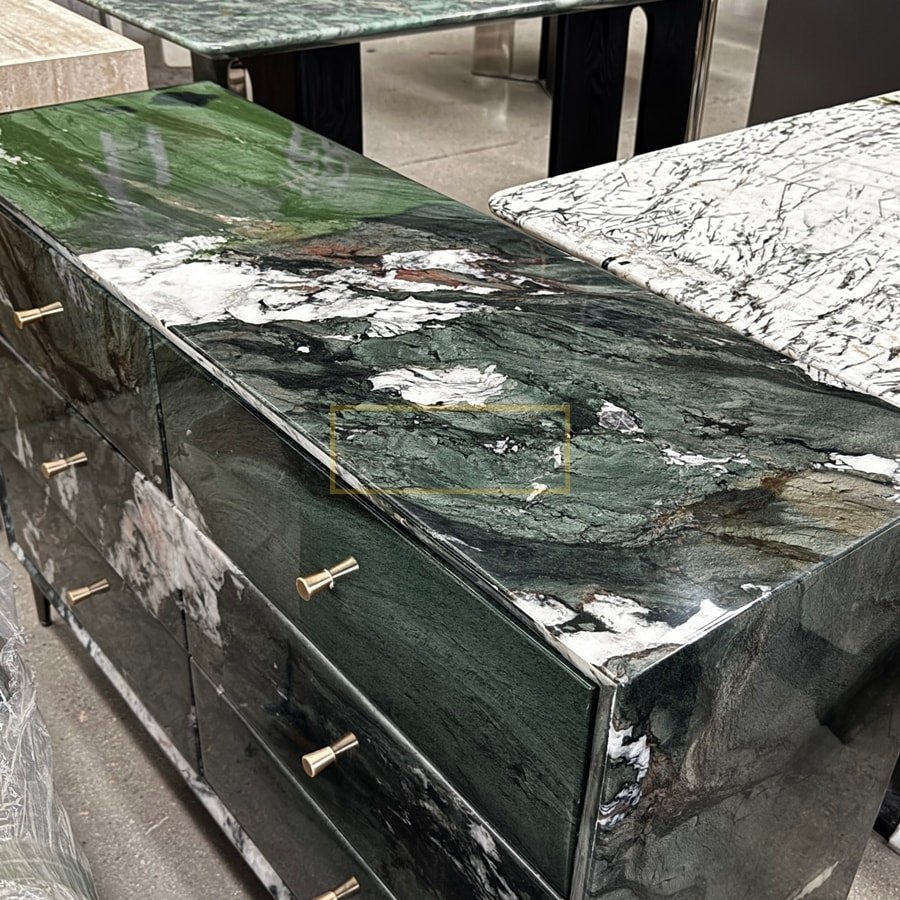
2026 Stone Industry Landscape: The Shift Toward Sustainability
Quick Summary: Stone Furniture Selection Guide
The global furniture market is witnessing a seismic shift in material preference. For decades, the debate of natural stone vs. manufactured stone was centered purely on price and appearance. However, as we move into 2026, the conversation has evolved to include health safety, environmental impact, and technological innovation.
Modern consumers are no longer just asking, “Is quartz more expensive than marble?” They are asking about the origin, the carbon footprint, and the safety protocols of the stone furniture factory where their pieces are crafted. This shift is largely driven by strict new labor laws in regions like Australia and parts of the EU, which have banned or restricted high-silica engineered stone to protect workers. Consequently, the industry is seeing a surge in “Next-Gen” materials—low-silica quartz and sintered stones—that mimic the soul of natural marble while offering the resilience of a lab-grown diamond.
Decoding the Terminology: What is Engineered Stone Called?
For many homeowners and interior designers, the terminology used by a wholesale stone furniture manufacturer can be confusing. To make an informed purchase, one must understand the linguistic nuances of the industry.
Understanding Engineered Quartz vs. Artificial Stone
What is engineered stone called in professional circles? Depending on the region and the specific binding agent used, it may be referred to as “composite stone,” “agglomerate stone,” or most commonly, engineered quartz.
Is quartz a stone? Technically, quartz is one of the most abundant minerals on Earth. However, the “quartz” used in furniture is a manufactured stone. It consists of roughly 90-94% crushed natural quartz aggregates bound together by polymer resins and pigments. In contrast, artificial stone is a broader umbrella term that can include anything from acrylic-based solid surfaces to porcelain-grade sintered stone.
The Role of Manufacturers: EDG Stone & Sunlife Stone
Industry leaders such as EDG Stone and Sunlife Stone have played a pivotal role in refining these materials. By utilizing advanced vacuum-vibration-compression technology, these factories produce slabs that are denser and less porous than most natural rocks. When looking for an engineered stone furniture manufacturer wholesale, it is essential to verify if they utilize the latest “Bretonstone” technology or similar high-pressure systems, as this dictates the longevity of the final furniture piece.
Performance Showdown: Natural Stone vs. Manufactured Stone for Furniture
When comparing natural vs. manufactured stone for applications like dining tables, coffee tables, or bathroom vanities, performance metrics such as porosity, hardness, and thermal stability are paramount.
Durability and Maintenance
Natural stone is “breathable,” meaning it has microscopic pores. While this adds to its organic charm, it also makes it susceptible to etching from acidic liquids like lemon juice or wine. Engineered vs. natural stone performance tests show that engineered quartz is virtually non-porous.
-
Engineered Stone: Requires no sealing, is highly resistant to bacteria, and can withstand heavy daily use in kitchens and offices.
-
Natural Stone: Requires periodic sealing (typically every 6-12 months) to maintain its luster and prevent deep-set stains.
Aesthetic Versatility: Natural Stone Veneer vs. Manufactured Stone Veneer
In modern furniture design, weight is a significant factor. This has led to the popularity of veneers. Natural stone veneer vs. manufactured stone veneer is a common dilemma for furniture designers. Natural veneers offer the authentic “cold touch” and random veining of a mountain-born slab. However, manufactured stone veneers (often made from ultra-thin sintered stone) provide better consistency for large-scale projects, such as a 12-seat boardroom table, where matching patterns across multiple slabs is required.
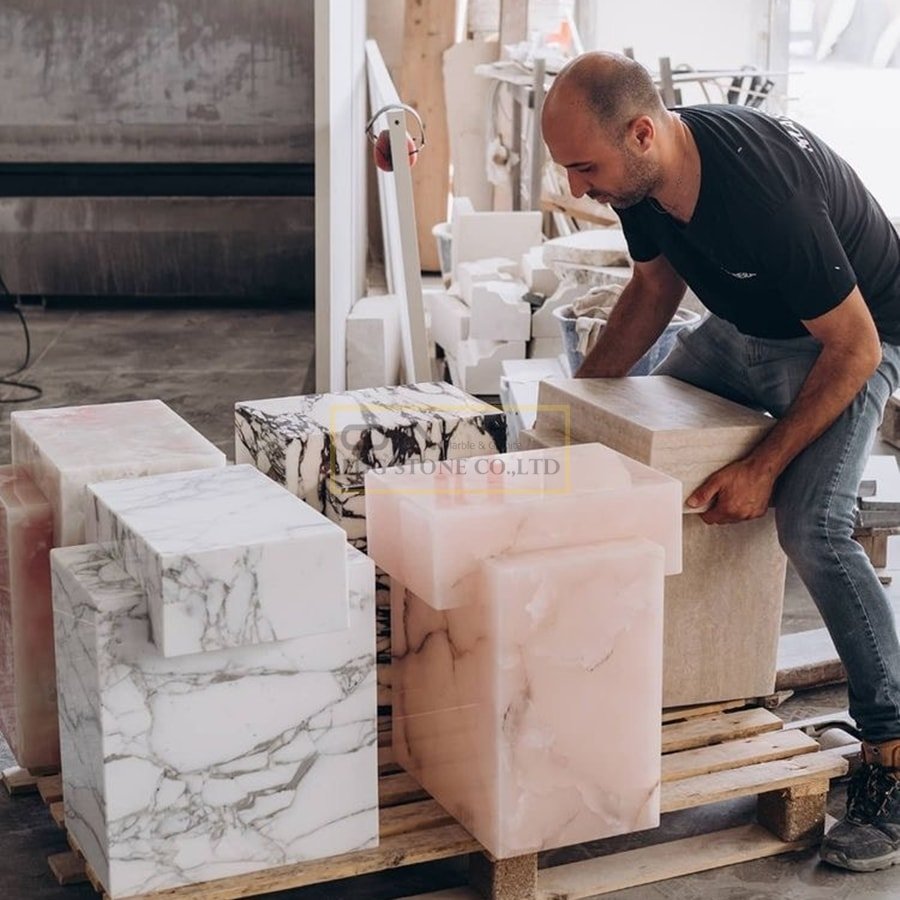
Investment Analysis: Is Quartz More Expensive Than Marble?
A primary driver for many B2B buyers and wholesalers is the cost-to-value ratio. A common question remains: Is quartz more expensive than marble?
The answer is nuanced. While entry-level Carrara marble can be cheaper than high-end branded quartz, "Luxury Stones" or "Exotic Marbles" (like Calacatta or Patagonia) can cost five to ten times more than the most expensive engineered surfaces.
Price Breakdown for Wholesale and Projects
When sourcing from a stone furniture factory, purchasing factory-direct significantly alters the pricing structure.
-
Wholesale Intent: Bulk orders of engineered stone often yield better margins because the manufacturing process is predictable and waste is minimized.
-
Natural Stone Variability: With natural stone, the price fluctuates based on the "yield" of the quarry. You are paying for rarity.
Engineered stone vs. natural stone countertops and furniture tops also differ in labor costs. Because engineered stone is more uniform, it is easier to cut and join, whereas natural stone requires a master artisan to navigate fragile veins and natural fissures, increasing the fabrication cost.
The New Normal of Stone Furniture: A Strategic Insight
Why the Industry is Moving Toward "Low-Silica" Solutions?
The global stone furniture market is undergoing a mandatory evolution. Regulatory bodies (such as Safe Work Australia) have set a precedent by banning high-silica engineered stone to eliminate health risks like silicosis. This has forced stone furniture manufacturers to innovate. The "New Normal" involves:
- Sintered Stone Dominance: Using extreme heat and pressure to bond minerals without high resin or silica content.
- Recycled Aggregates: Incorporating glass and porcelain waste into artificial stone to meet LEED and ESG certifications.
- Digital Printing: Advancements in 3D inkjet technology allow Sunlife Stone and other factories to print hyper-realistic marble veins into the depth of the engineered slab, not just on the surface.
For wholesalers, the move toward natural vs. manufactured stone is no longer just about aesthetics—it is about future-proofing your supply chain against upcoming environmental and health regulations.
about
avada factory
Sempery ultricies nibh at dolor cras urna eleifend nec. Atiam efficitur tempor.