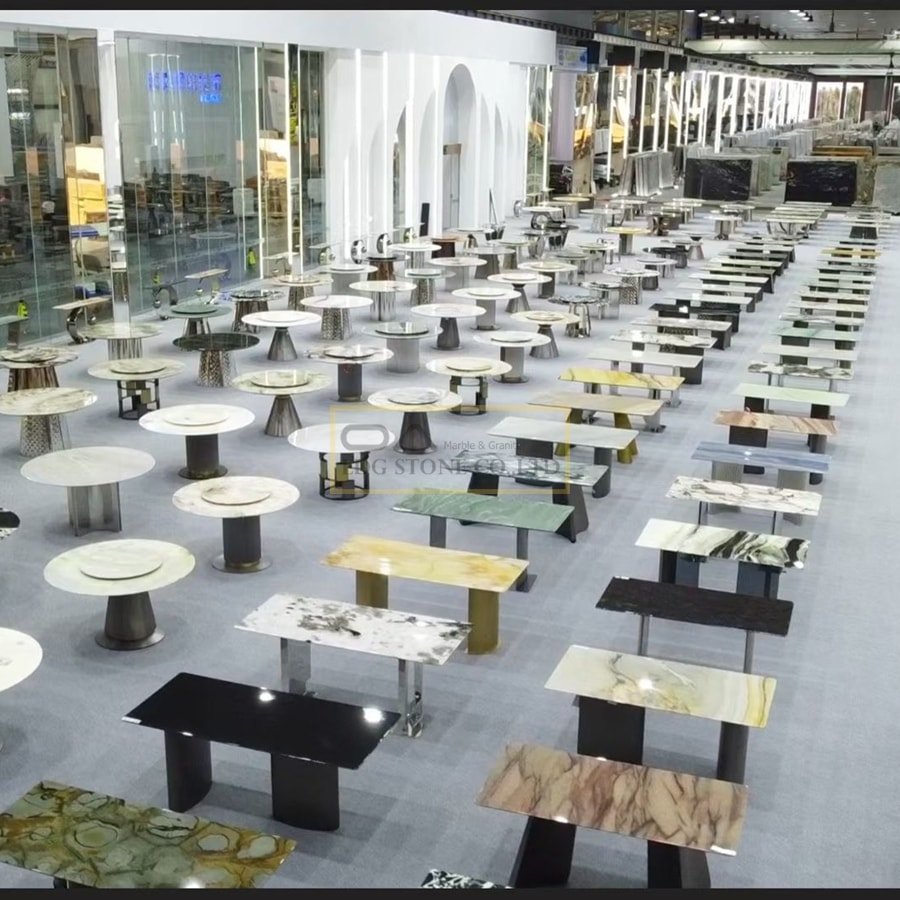
Understanding the Core Differences: What Defines Matte and Polished Finishes?
The tactile and visual quality of natural stone—whether utilized in grand architectural facades, sophisticated interior flooring, or bespoke stone furniture design—is profoundly defined by its final surface treatment. While the raw material itself holds intrinsic value, the finish dictates how the stone interacts with light, resists environmental stressors, and serves the functional needs of the user. For industry professionals, from interior designers to a high-end stone furniture manufacturer’s wholesale pricing specialist, understanding these core differences is not merely an aesthetic consideration but a technical imperative. The two most prominent finishes dominating the market are polished and matte (often referred to in the trade as honed).
The Anatomy of a Polished Finish: Achieving the Mirror-Like Reflection
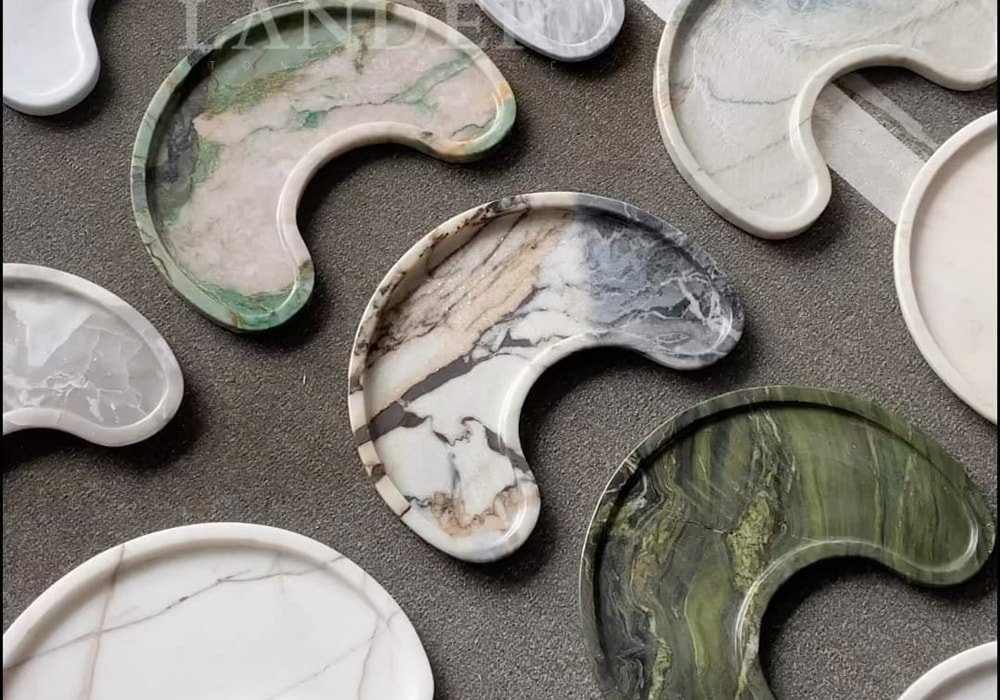
A polished finish represents the peak of stone refinement. It is achieved through a meticulous, multi-stage mechanical process where the stone surface is buffed with progressively finer abrasive pads. This process is not a coating; rather, it is the physical smoothing of the stone’s crystalline structure until it becomes perfectly flat at a microscopic level. The result is a high-gloss, mirror-like surface that maximizes light reflectance.
This finish is prized for its ability to enhance the innate characteristics of the stone. Colors become more saturated, and intricate veining patterns—such as those found in luxury Carrara or Calacatta marble—are brought into sharp, vibrant focus. However, the flat surface that creates the shine is also a liability: it reveals every imperfection. Scratches, etching from acidic substances, and even dust are highly visible.
The Rise of Matte (Honed) Surfaces: Why “Organic Minimalist” is Dominating 2026?
In contrast, a matte or honed finish is stopped earlier in the polishing process. The surface remains flat and smooth but is satin-like and non-reflective. While a polished surface interacts aggressively with light, a matte surface absorbs and diffuses it. This creates a softer, more relaxed aesthetic that emphasizes the natural, earthy texture of the stone over its polished brilliance.
As we look toward sustainable stone and wood furniture design trends 2026, the matte finish is experiencing a significant surge in popularity. This trend is driven by a global shift toward “Organic Minimalism” and “Biophilic Design,” where designers seek materials that feel raw, authentic, and connected to nature. Matte surfaces provide a sense of groundedness and understated luxury that polished surfaces cannot replicate. Furthermore, from a practical standpoint, the textured surface of a honed finish is far superior at concealing scratches, water spots, and biological growth, making it low-maintenance and highly functional.
Comparative Data Table: Light Reflectance Value (LRV) and Slip Resistance (R-Value)
The technical distinction between these finishes is best understood through standardized metrics: Light Reflectance Value (LRV) and Slip Resistance (R-Value), which are critical for meeting building codes in areas such as stone furniture in Australia or the US.
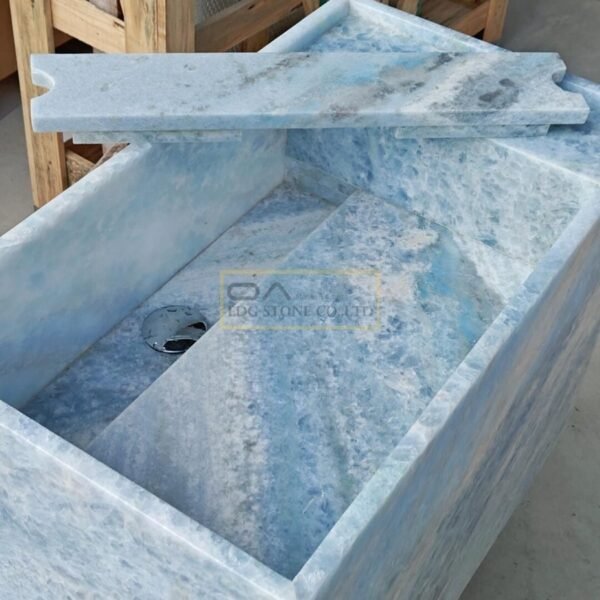
Sunlife Stone
Bathroom & Wet Area Applications: The Great Tile Debate
Nowhere is the choice between matte and polished finishes more contentious—or more critical—than in the bathroom. The debate often centers on the balance between high-end luxury aesthetics and mandatory safety standards. Designers must navigate the requirements for polished vs matte tile in bathroom settings by analyzing both the horizontal (flooring) and vertical (shower walls) applications.
Polished vs. Matte Tile for Shower Walls: Aesthetics vs. Limescale Visibility
When considering polished vs matte tile for shower walls, the decision is primarily one of maintenance and lighting. Polished porcelain or marble tiles are highly favored for small shower enclosures because their reflective surface bounces light around, making the space feel significantly larger and cleaner. The slick surface also allows water to shed quickly.
However, a polished vertical surface has a primary drawback: it highlights water spots, soap scum, and limescale buildup. In regions with hard water, keeping a polished shower wall pristine requires daily attention. Matte vs polished porcelain tile for shower walls presents a compelling alternative. A matte finish will effectively camouflage these mineral deposits, requiring less frequent scrubbing. From a design perspective, matte shower walls contribute to a spa-like, tranquil atmosphere that aligns with contemporary wellness design trends.
Safety First: Is Matte Tile Better for Bathroom Floors? (Anti-slip Standards)
While the choice for walls is aesthetic, the decision for bathroom and shower flooring is explicitly governed by safety regulations. The central question asked by homeowners is: Is matte tile good for shower walls, and, more importantly, Polished vs matte tiles in bathroom floors?
The definitive answer from a safety and liability perspective is that matte is superior for wet flooring. Polished stone and porcelain become extraordinarily slippery when wet, creating a severe slip-and-fall hazard. Most international building codes (such as those referenced by stone furniture adel ga suppliers) require a minimum slip resistance coefficient (like an R10 or R11 rating) for wet area flooring. Matte tiles naturally provide this friction. When selecting stone from a stone furniture store, ensure the material spec sheet lists the appropriate wet slip resistance rating for its intended use.
Maintenance Insight: Which Finish Hides Water Spots Better?
If longevity and low maintenance are the primary design drivers, matte finishes win. While polished stone is less porous overall, any liquid that does manage to etch or stain the surface will cause a permanent dull spot that ruins the uniform shine. On a honed or matte surface, a similar stain or slight acid etch often blends into the existing texture, rendering it nearly invisible.
The “Matt finish tiles disadvantages” are few but notable: they are slightly more porous than polished tiles, meaning they require more robust sealing upon installation to prevent deep staining from oils or dyes. They may also require different cleaning agents that don’t leave a dull residue on the already non-reflective surface.
Stone Furniture Revolution: Elevating Interiors with Sunlife Stone
Natural stone is transcending its traditional role as a flooring and countertop material, emerging as a dominant force in high-end, contemporary furniture design. This shift is led by manufacturers like Sunlife Stone, who are pushing the boundaries of what is possible with material fusion and precision engineering. The choice of finish on a piece of stone furniture is what determines its interaction with the broader design scheme.
The Stone Coffee Table Trend: Why Designers Prefer Matte Marble for Living Rooms
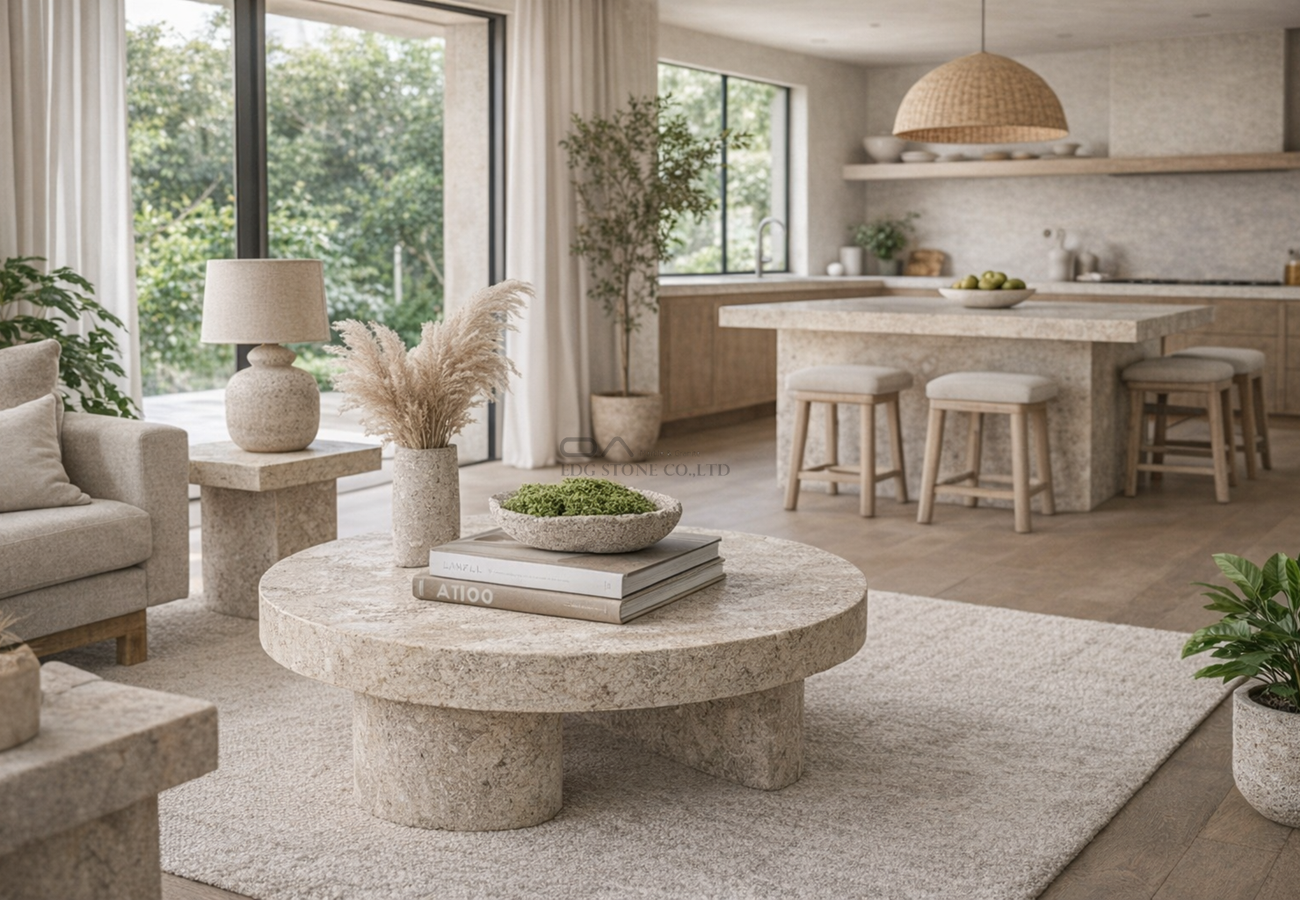
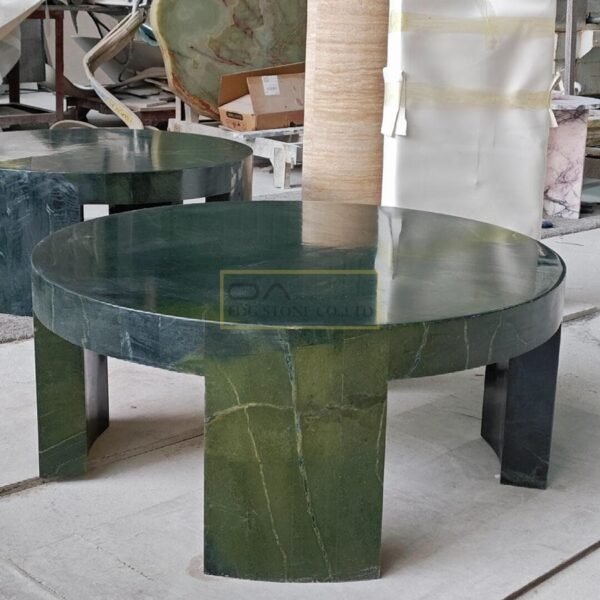
The Stone Coffee Table has become a statement piece in modern living rooms. When selecting a coffee table, designers are overwhelmingly prioritizing honed or matte finishes over polished ones. The reason is utility. A coffee table is a high-touch surface subjected to spills, sliding cups, and heavy objects.
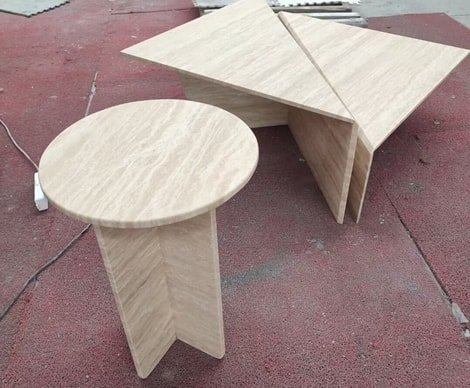
A polished marble coffee table, while initially stunning, will quickly accumulate microscopic scratches (known as “wear paths”) and acid etches from spilled beverages (like juice or wine). These imperfections are glaring under ambient light. A matte finish, however, absorbs this wear gracefully. Sunlife Stone recommends a honed travertine or a flamed granite for coffee tables, ensuring they remain beautiful and functional for decades, rather than months.
Stone and Wood Furniture Fusion: Balancing Textures for a Warm Modernist Look
A major design trend driving the industry is the combination of stone and wood furniture. This fusion balances the cool, hard permanence of stone with the warm, organic texture of wood. Achieving this balance requires careful management of light and texture.
Typically, a highly polished stone top paired with natural wood creates a sharp, sometimes jarring contrast that leans toward 1980s retro-futurism. For a modern, “Organic Modernist” aesthetic, designers pair honed or sandblasted stone with matte-finished or cerused wood. The matching non-reflective finishes unify the two disparate materials, making them feel like they belong together. This is crucial for creating the cohesive, artisanal look valued by premium buyers.
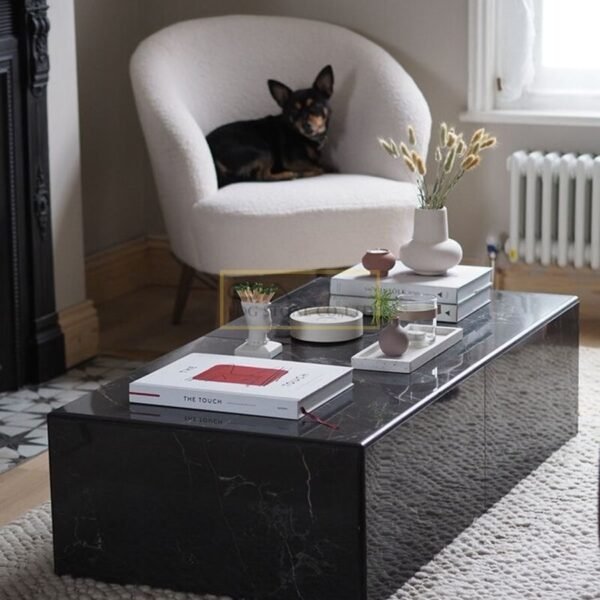
Stone Furniture Design
Specialized Materials: From Fossil Stone Furniture to Nichols and Stone-Inspired Classics
The stone furniture market is diversifying beyond standard marble and granite. Fossil stone furniture, characterized by the preservation of prehistoric marine life within the stone matrix, is highly sought after as a unique focal point. These materials are almost always finished in a matte or low-sheen satin to allow the incredibly intricate details of the fossils to remain visible without the distortion of glare.
Furthermore, the influence of legacy brands like Nichols and Stone furniture, known for their masterful wood craftsmanship, is being integrated into the stone industry. Sunlife Stone, for example, explores how traditional wood joining techniques can be replicated in stone-to-wood transitions, necessitating matte finishes on the stone to match the hand-rubbed quality of fine wood finishing.
Gaming Aesthetics in Reality: Implementing “Stone Furniture Terraria” Styles in Modern Architecture
In a fascinating convergence of virtual and physical design, the distinctive “cubic” and textured look of Stone furniture terraria has inspired a sub-genre of brutalist and minimalist architecture. High-end clients who grew up with virtual world-building are seeking furniture that replicates this raw, blocky aesthetic.
Implementing stone furniture terraria styles in reality requires thick, slab-like stone components, often with matte, abrasive, or flamed finishes (such as fossil stone furniture). Polished surfaces are too refined for this trend; the goal is to celebrate the stone’s raw, heavy, and geological presence. These pieces are often left unsealed or treated with penetrating sealants that do not change the stone’s natural, light-absorbing appearance.
Outdoor Resilience: Selecting Finishes for Stone Furniture for Gardens
The requirements for stone furniture for garden use differ dramatically from interior applications. Outdoor pieces are subjected to UV radiation, freeze-thaw cycles, acidic rain, and biological growth (moss and algae). The finish selected is the primary defense against these elements.
Weathering and UV Resistance: Does a Polished Finish Fade Outdoors?
While natural stone itself is highly resistant to UV light, a polished finish is not. Intense sunlight will slowly dull the microscopic flatness of a polished surface, making it appear cloudy and uneven within a few years. For outdoor stone furniture, a factory-polished finish is a poor long-term investment.
Matte finishes, on the other hand, are essentially pre-weathered. They are not reliant on a fragile surface layer for their aesthetic appeal. Whether you are sourcing from a stone furniture Australia specialist or a supplier in a more temperate climate, honed, flamed, or sandblasted finishes are the industry standard for exterior stone. These textures allow the stone to age naturally, developing a beautiful patina that enhances its geological character.
Stone Furniture Outdoor Care: Managing Etching and Biological Growth
Biological growth is the primary maintenance challenge for outdoor stone. A high-gloss polished surface is very smooth, providing fewer anchoring points for moss or algae. In contrast, matte or rougher textures provide a better substrate for growth.
However, a matte surface is much easier to clean aggressively without damaging the look. Fossil stone furniture used outdoors, for instance, can be power-washed (carefully) or scrubbed with stiff brushes to remove biological matter, and the resulting surface will still look consistent. Trying to scrub a polished outdoor table will leave visible scratch marks. Leading manufacturers of stone furniture for outdoor applications utilize textured finishes coupled with professional-grade, breathable penetrating sealants to balance slip resistance, low maintenance, and protection.
Global Sourcing: Finding Stone Furniture in Australia, Georgia (Adel, GA), and Beyond
The demand for durable, beautiful stone furniture is global, yet supply chains are often localized due to the material’s weight. Clients seeking stone furniture near me will find specialized regions. For example, stone furniture adel ga suppliers often leverage regional limestone and granite reserves, while stone furniture Australia specialists specialize in handling unique native sandstones and robust, quartz-based materials that can withstand the harsh Southern Hemisphere climate.
When sourcing globally or locally, the finish specification remains the critical factor. Regardless of the stone’s origin, a high-end stone furniture manufacturer’s wholesale pricing structure should provide clear options for finish customization based on the client’s final installation climate and use case.
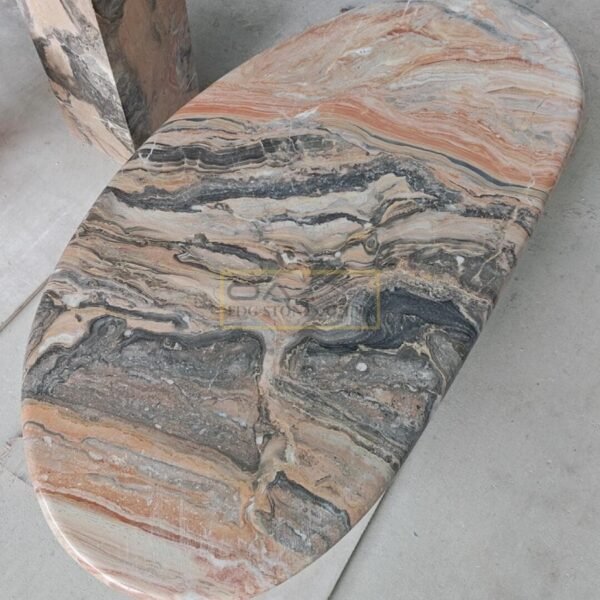
Stone Coffee Table
Technical & Regulatory Deep Dive: 2026 Industry Standards
The stone industry is facing unprecedented transformation due to new environmental and health regulations. These shifts are affecting everything from extraction to the final finish applied by a stone furniture manufacturer. For designers and architects specifying stone for large projects, compliance with these new standards is mandatory.
New Sustainability Laws: The Impact of EPDs (Environmental Product Declarations) on Stone Manufacturing
Governments worldwide are implementing strict “Green Building” codes and carbon tracking for construction materials. Central to this is the requirement for Environmental Product Declarations (EPDs). An EPD provides a transparent, third-party verified report on the lifetime environmental impact of a product.
For natural stone, this means manufacturers must track the energy used not just in quarrying, but also in finishing. Achieving a matte finish generally requires fewer polishing stages and fewer chemical abrasives than a high-gloss polished finish, giving it a lower carbon footprint in the manufacturing phase. Sustainable stone and wood furniture design trends 2026 are heavily influenced by this data. Architects are increasingly specifying matte or low-processing finishes to maximize the LEED or BREEAM credits of their projects.
Silica Safety & Compliance: How Sunlife Stone and Leading Factories are Adapting?
The most critical regulatory challenge facing the stone industry is the management of respirable crystalline silica (RCS). When stone is cut, ground, or polished, it releases microscopic silica dust, which can cause silicosis, a fatal lung disease. New safety standards (such as those from OSHA in the US and Safe Work Australia) have drastically lowered permissible exposure limits (PEL).
Leading manufacturers, including Sunlife Stone, are investing heavily in water-integrated suppression systems and advanced robotic finishing tools to eliminate dust generation during the finishing process. This regulatory pressure is also subtly influencing market trends. In some regions, there is a shift toward finishes that generate less RCS during production, or toward materials with lower silica content, like certain limestones used in fossil stone furniture, which can be finished in a matte style with less risk than high-silica engineered stones.
The Role of Stone Furniture Paint and Sealants: Enhancing Longevity without Compromising Health
The use of stone furniture paint or superficial coatings to achieve a high-gloss finish is generally frowned upon in the premium stone furniture market, as it degrades the authenticity of the material. Instead, the industry relies on advanced sealants.
The trend for 2026 is toward eco-friendly, water-based, low-VOC (Volatile Organic Compound) penetrating sealants. For polished stone, these sealants protect the closed surface structure. For matte stone, they are even more critical, as they saturate the pores of the textured surface to prevent deep-set staining while allowing the stone to breathe. These new sealants are essential for making both finishes compatible with modern healthy building standards (like WELL Certification).
Strategic Sourcing: Why Buying Direct from a Stone Furniture Manufacturer Matters?
The complexity of selecting the right stone, finish, and ensuring regulatory compliance makes the sourcing strategy vital. While a stone furniture store provides consumer convenience, sourcing directly from a high-end stone furniture manufacturer, a wholesale pricing specialist offers significant advantages for designers, architects, and high-volume buyers.
Wholesale Advantages: From Stone Furniture Stores to Factory Direct Models
Buying directly from a factory, like the Sunlife Stone facility, eliminates the retail markup and provides direct access to the technical expertise of the fabricators. Factory-direct models are particularly beneficial for custom projects where a non-standard finish (such as a sandblasted texture or a specific matte patina) is required.
Furthermore, a dedicated manufacturer can provide verification of EPDs and silica compliance in their production line, which a third-party retailer might not be able to guarantee. This transparency is crucial for commercial projects where regulatory documentation is a prerequisite.
Quality Control: How to Inspect Regray Stone & Furniture for Structural Integrity
When sourcing specialized products, such as Regray stone & furniture known for its unique aesthetic, direct factory access ensures stringent quality control. Inspecting a stone table for structural integrity goes beyond the surface finish.
In the factory, you can inspect the quality of the stone slab before it is cut, ensuring there are no hidden fissures or weak veining that could cause the table to crack under stress. For matte finishes, you can verify that the texture is uniform across the entire surface and that any natural “voids” in stones like travertine have been filled professionally, rather than simply covered over with a superficial finish.
Near Me vs. Global: Cost-Benefit Analysis of Local Sourcing vs. International Wholesale
The ideal sourcing strategy often involves balancing local presence with global capability. While looking for stone furniture near me is intuitive for quick delivery and local support (such as a local Olivia Stone furniture showroom), commercial projects often require the volume and pricing power of international wholesale manufacturers.
The cost-benefit analysis must include the logistical costs of heavy stone transport versus the wholesale savings. Leading global manufacturers are adapting by setting up regional hubs or certified local fabrication partners, ensuring that a client in stone furniture australia can access the global catalog and pricing of a major manufacturer like Sunlife Stone while utilizing local finishing and delivery expertise.
The “Sunlife Stone” Recommendation: Pros and Cons Summary Table
Selecting between a matte and polished finish is rarely a right-or-wrong decision; it is a context-dependent choice balancing aesthetic intent, functional requirements, and maintenance capability.
Outdoor Stone Furniture
Google Search Trends FAQ (People Also Ask)
Is matte tile harder to clean than polished tile in a shower?
Generally, no. While matte tiles are slightly more porous, they are far superior at concealing the water spots, soap scum, and limescale that are glaringly visible on polished surfaces. In a shower, a matte finish reduces the required frequency of cleaning because it visually camouflages the standard mineral buildup, making it the lower-maintenance option long-term.
Does polished marble stain more easily than matte marble?
Polished marble is actually slightly more resistant to liquid penetration because the mechanical polishing process closes the stone’s surface pores. However, polished marble is more vulnerable to “etching”—dull marks caused by acidic substances. Because a polished surface is uniform and reflective, even a minor etch is highly visible, whereas the same etch would blend into the texture of a honed, matte surface.
Can I paint my stone furniture to change the finish?
While you technically can use specialized stone furniture paint, it is generally not recommended for premium stone furniture as it obscures the natural beauty, veining, and texture that make stone valuable. Painting can also peel over time. A better approach to altering a finish is professional mechanical refinishing (honing or repolishing) or applying a color-enhancing penetrating sealant.
Why is fossil stone furniture considered a premium investment?
Fossil stone furniture is considered premium because it is fundamentally a piece of natural history, capturing the preserved forms of prehistoric marine life within the stone matrix. Each piece is unique and cannot be replicated. The intricate details of the fossils are best appreciated in a matte finish, which eliminates glare, allowing the stone to serve as a singular, conversation-starting focal point in luxury interiors.
Which stone finish is best for outdoor furniture in high-heat climates like Australia?
For high-heat and high-UV climates like Australia, a matte or textured finish (such as flamed or sandblasted) is the only viable option for outdoor stone. A polished finish will quickly dull and cloud under intense sunlight. Matte stone furniture, such as that provided by stone furniture Australia specialists, absorbs heat better than reflective surfaces, allowing it to maintain its color and integrity while developing a durable natural patina over time.
The Future of Stone Surface Engineering: Beyond the Matte vs. Polished Binary
The future of natural stone design, particularly as led by innovators like Sunlife Stone, is moving beyond a simple choice between matte and polished finishes. We are entering an era of engineered textures and hybrid finishes, driven by the demands of Organic Minimalism and stringent sustainability regulations. The 2026 market will see a rise in satin-like, “leathered” finishes and highly controlled “caressed” textures that offer the low-maintenance, scratch-concealing benefits of a honed surface while retaining some of the vibrant color depth of a polished stone. Crucially, these new finishes are being developed using dust-free, water-integrated robotic technologies to meet global silica safety standards, making them both health-compliant and visually distinct. As architects prioritize Environmental Product Declarations (EPDs), the inherently low-processed nature of matte and textured finishes positions them as the premier choice for sustainable, high-value stone furniture in the commercial and luxury residential sectors.
Reference
-
“Standard Specification for Marble Dimension Stone (Exterior and Interior).” ASTM International.
-
“Standard Specification for Granite Dimension Stone.” ASTM International.
-
“Respirable Crystalline Silica.” Occupational Safety and Health Administration (OSHA).
-
“Silica and the Stone Industry: Managing the Risk.” Safe Work Australia.
-
“Natural Stone: The Sustainable Choice.” Natural Stone Institute.
-
“AS 4586: Slip resistance classification of new pedestrian surface materials.” Standards Australia.
-
“Sustainable Design Trends 2025: Biophilic and Organic Modernism.” American Society of Interior Designers (ASID).
-
“Sourcing and Inspecting Natural Stone: A Buyer’s Guide.” Stone World Magazine.
about
avada factory
Sempery ultricies nibh at dolor cras urna eleifend nec. Atiam efficitur tempor.